

The putter. The most personal golf club a golfer carries in their bag. Selecting one comes down to personal preference and choosing the one that feels right and looks best to your eye. A lot of different shapes, weights, alignments and other variables exist on the putter market today and it all comes down to the golfer’s subjective decision. When it comes to choosing a short stick, this guide is here to help when considering your preferred alignment, head shape, length, face, shafts and hosels.
PUTTER ALIGNMENT
Better putting starts with proper alignment. It’s important to select a putter that you can comfortably and easily line up to the target. Incorrect alignment leads to misses left or right of the hole, which adds strokes to your score. Alignment means more than just getting you aimed properly at your target. Incorrect alignment can also cause you to miss the sweet spot on the putter. Best-selling author Dave Pelz says that if everything goes right with the putting stroke, but the ball is struck just ¼ inch from the sweet spot, the putt will miss 95% of the time from 8 feet. Some putter designs place more emphasis on alignment than others. You should choose one that inspires confidence when looking down at address.

PUTTER HEAD SHAPES: BLADE VS. MALLET
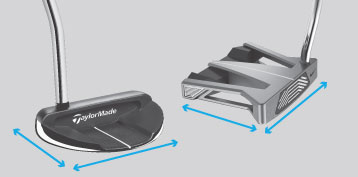
There are two basic head shapes to putters: blades and mallets. Blades are traditional looking heads, long and narrow. Mallets are larger heads, nearly as wide from the face to the back as they are from heel to toe, with a wide variety of designs. Some golfers prefer the perimeter-style weighting of a wider mallet because it provides more stability on putts that aren’t hit exactly in the center of the face.
BLADES – TRADITIONAL LOOK – LONG AND NARROW

MALLETS – NEARLY AS WIDE FROM FACE TO BACK AS FROM TOE TO HEEL
PUTTER LENGTHS
Putter lengths don’t vary as much as they used to due to USGA Rule 14-1b, also known as the anchoring ban. When the ban took effect on January 1, 2016, long putters and belly putters were not as popular as they once were. They are still available, you are just not allowed to anchor the putter to any part of your body. This led to an increase in counterbalance putters. Counterbalance putters utilize extra weight in the grip and heavier heads to promote full arm motion instead of breaking the wrists. There are putters now that offer adjustable weights in the grip so golfers can get the exact feel they’re looking for. Putters generally come in lengths from 32 inches through 36 inches. This makes it even more important to select a putter that feels right and helps create a pendulum stroke while minimizing wrist action. Make sure you feel confident and comfortable with your putter.
TRADITIONAL: 32-36″ LENGTH PUTTERS WORK WITH THE NATURAL FLOW OF YOUR PUTTING STROKE

COUNTERBALANCE: 36-38″ PUTTERS ARE LONGER, ALLOWING GOLFERS TO GRIP DOWN AND KEEP THE ADDED WEIGHT ABOVE THE HANDS FOR A MORE STABLE STROKE

PUTTER FACES: INSERT VS. MILLED
The two basic choices of putter face are insert or milled. Golfers who prefer milled faces like the audible feedback they get in addition to the feel. You can immediately hear contact so you can both feel and hear where the center of the putter is. Inserts are made of composites and are used by golfers who prefer softer feeling putts. The inserts also redistribute weight to the heel and toe of the putter for more forgiveness. Inserts don’t provide the sound feedback that milled putters do, so knowing how you prefer your putts to sound and feel is important. Both types of faces have patterns on them that help produce forward roll and reduce skid while also allowing putts stuck near the heel or toe of the putter to come off hotter and maintain performance.
PUTTER INSERT – PROMOTES A SOFTER FEEL AND SOUND

MILLED – PROMOTES FIRM, CRISP FEEL AND SOUND FEEDBACK

SHAFTS & HOSELS
There are three main options for the hosel set up with a putter: heel-shafted, center-shafted, and offset. Heel-shafted putters are extremely common, found on all shapes and sizes of putters. They can be face-balanced or have toe hang. Center-shafted putters work better with a flat, pendulum stroke and sets up easily for players who keep their eyes directly over the ball. An offset hosel provides a better sight line away from the golf ball and helps keep your hands ahead of the club head through impact. This also aids in alignment but be careful. If your putter has too much offset, it can cause you to miss your putts to the right.
HEEL SHAFTED – CONNECTS TO THE HEEL OF THE HEAD, THE MOST COMMON TYPE OF PUTTER

CENTER SHAFTED – CONNECTS TO THE CENTER OF THE HEAD, IDEAL FOR PLAYERS WHO SET UP WITH THEIR EYES DIRECTLY OVER THE BALL

OFFSET PUTTER – HELPS PLAYERS CREATE A CONSISTENT SETUP AND AIDS IN ALIGNMENT
TOE HANG & PUTTING STROKE
One of the most important aspects in picking the correct putter is making sure you have a putter that matches the natural motion of your putting stroke. There are three common types of putting strokes: straight back, straight through, slight arc, and strong arc. Which type you use is determined by how much you open and close the face of the putter during the stroke. The more you open and close the face, the more arc your putting stroke has. If you do not open it at all, then you have a straight back, straight through putting style.

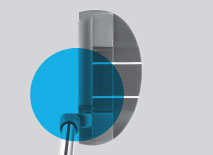
To make sure you have the right putter for your putting stroke, you need to be familiar with toe hang. Putters come in two types: face-balanced and toe hang. To see which type of putter you have, take it and balance the shaft near the head on your finger. If the face points straight up, you have a face-balanced putter. If the toe points down toward the floor, you have a putter with toe hang.

For those golfers who have a straight back, straight through putting stroke, you can benefit most from a face-balanced putter. Face-balanced putters resist opening and closing during the swing, making them a perfect fit for straight back, straight through strokes.
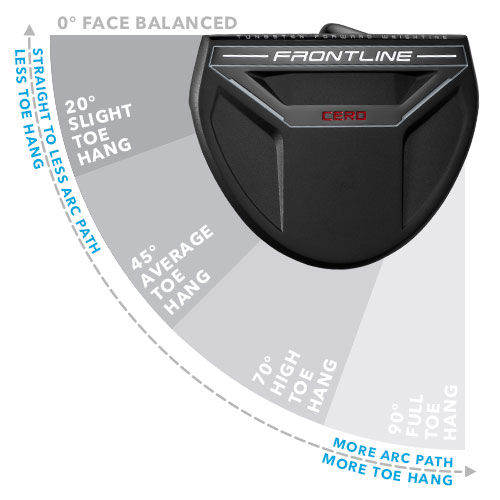
For golfers who have an arc to their putting stroke, or open and close the face through the swing, a putter with toe hang will benefit them more. The more arc in your stroke, the more toe hang you can use in your putter. Toe hang aids in a putter being able to open and close naturally with the motion of the putting stroke so it better fits the way you swing it.
